
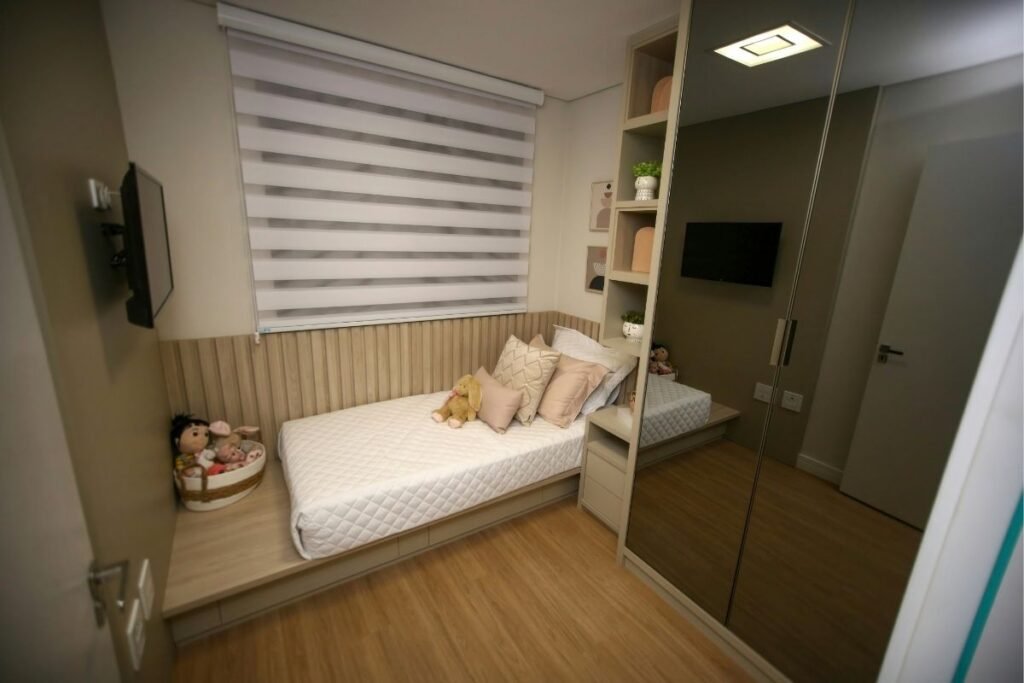
A small bedroom doesn’t mean you have to sacrifice style or comfort. In fact, small spaces often force you to be more intentional about every design choice, which frequently results in rooms that feel more curated and thoughtfully designed than their larger counterparts. The key is working with your space’s limitations rather than fighting against them, choosing pieces that serve multiple purposes, and using design strategies that make compact rooms feel larger and more functional.
Small bedrooms have become increasingly common, whether you’re living in an apartment, a starter home, a guest bedroom, or simply working with the layout you’ve got. The good news is that beautiful, comfortable, and stylish small bedrooms are absolutely achievable. It comes down to smart furniture selection, strategic use of vertical space, strategic color choices, and designing with intention so that every square foot serves a purpose.
We’ve gathered 25 small bedroom ideas that transform compact spaces into beautiful, functional sanctuaries. These approaches work within tight square footage, make rooms feel larger than they are, and prove that small doesn’t mean you have to compromise on style or comfort.
1. Choose the Right Size Bed for Your Space
Your bed is the largest furniture piece in your bedroom, so getting the right size is crucial. A queen might overwhelm a small bedroom; a full or twin might be more proportionate. Measure your space carefully and leave enough room to walk around comfortably.
Consider a platform bed or bed frame without a footboard to make the space feel less cramped. Every inch of walking space matters in a small bedroom.
Also read : Cozy Living Room Ideas to Create a Warm Space
2. Utilize Vertical Space with Tall Shelving
When floor space is limited, go vertical. Tall bookcases, floating shelves that reach toward the ceiling, and wall-mounted storage all make use of vertical space without eating up precious floor area.
Shelving draws the eye upward, making small rooms feel taller and more spacious. Style shelves with books, plants, and decorative objects to add personality without visual clutter.
3. Mount Your Television on the Wall
A wall-mounted TV takes up far less space than a television stand and keeps floor area clear and open. Hide cables behind the wall for a clean, intentional look that doesn’t visually clutter your space.
Wall-mounted televisions are especially valuable in small bedrooms where every inch of floor and furniture surface matters for functionality and visual flow.
4. Use Under-Bed Storage Strategically
The space under your bed is real estate you can’t afford to waste. Use storage bins, drawers, or a bed frame with built-in storage to keep seasonal items, extra bedding, or off-season clothing tucked away neatly.
Under-bed storage keeps clutter out of sight while maintaining your small bedroom’s clean, open feeling. Label your bins so you know exactly what’s stored where.
5. Choose Light Colors to Expand Visual Space
Light walls, light bedding, and light furniture all make small rooms feel larger and more airy. Soft whites, creams, warm grays, and pale pastels create a sense of openness and light.
You can add color and personality through accents and accessories rather than large pieces. A light color foundation makes small spaces feel less confining.
6. Install Floating Nightstands
Traditional nightstands take up floor space and make small bedrooms feel cramped. Floating nightstands accomplish the same function while keeping the floor visually clear and open.
Floating shelves beside your bed work beautifully as nightstands, providing surface space for lamps and essentials without the bulk of freestanding furniture.
7. Use Mirrors to Reflect Light and Create Depth
A well-placed mirror reflects natural light and creates the illusion of additional space. Position mirrors opposite windows or on walls where they’ll bounce light around your bedroom.
Mirrors are magic in small spaces. They’re functional, decorative, and make rooms feel instantly larger and brighter without taking up any actual floor space.
8. Keep Window Treatments Simple and Light
Heavy, dark curtains visually shrink small bedrooms. Choose light-colored, simple window treatments like sheer curtains, linen panels, or minimalist blinds that let light in while maintaining privacy.
Lightweight fabrics and pale colors keep windows feeling open and bright. Your window treatments should enhance rather than compete with your space.
9. Incorporate Multi-Purpose Furniture
In a small bedroom, every piece should earn its place by serving multiple functions. A storage ottoman doubles as seating and storage, a bench at the foot of the bed provides seating and storage, a desk with shelving above offers work and display space.
Multi-purpose furniture is essential in small spaces because it lets you have everything you need without requiring twice the floor space.
10. Create a Compact Workspace
If you need a desk or workspace, choose a compact, wall-mounted option or a narrow desk that doesn’t overwhelm the room. A floating desk takes up minimal floor space while providing functional work area.
Small bedrooms often serve double duty as bedrooms and home offices, so having a dedicated workspace that doesn’t consume the entire room is essential.
11. Use Vertical Wall Space for Decor
When floor space is precious, decorate your walls instead of your surfaces. A gallery wall, floating shelves displaying art and objects, wall-mounted organizers, and hooks all add personality without cluttering floor or furniture surfaces.
Walls are free real estate in small bedrooms. Use them strategically to add visual interest and personality without taking up any actual space.
12. Choose a Statement Headboard or Wall Treatment
A headboard or accent wall behind your bed anchors the room and makes it feel designed rather than cramped. This focal point draws attention to your bed rather than highlighting how little floor space exists.
A bold wallpaper, painted accent wall, or upholstered headboard creates visual interest and makes your bedroom feel intentionally designed despite its size.
13. Keep Furniture Minimal and Essential
In small bedrooms, every piece of furniture should be necessary. Limit yourself to your bed, nightstand, dresser, and perhaps one additional piece like a chair or bench. Avoid trying to squeeze in extra pieces just because you love them.
A pared-down approach to furniture makes small bedrooms feel functional, organized, and visually spacious. You can always add pieces later if you truly need them.
14. Use Transparent or Leggy Furniture
Furniture with exposed legs and transparent elements maintains visual flow in small spaces. A glass desk, lucite chair, or bed frame with legs all keep sightlines open rather than visually blocking the room.
Transparent and leggy furniture makes small bedrooms feel less crowded because you can see through and around pieces rather than having them sit solidly on the floor.
15. Layer Lighting for Functionality and Ambiance
Small bedrooms need flexible lighting since there’s limited space for multiple fixtures. Combine bedside lamps with wall sconces or a small pendant light to create layered lighting that you can adjust.
Dimmer switches give you control over ambiance and make small rooms feel more spacious by letting you adjust light levels throughout the day.
16. Incorporate Soft Textures in Neutral Tones
Layer textures through pillows, throws, and bedding in soft, coordinating colors. This adds visual interest and coziness without the visual weight of contrasting colors or busy patterns.
Texture makes small spaces feel more inviting and comfortable. Mixing materials like linen, velvet, and cotton creates depth without requiring more floor space.
17. Use Soft, Muted Color Palettes
Busy patterns and bold color combinations can make small rooms feel chaotic. Choose a soft, muted color palette with one or two accent colors for visual interest without overwhelming the space.
A cohesive, restrained color scheme makes small bedrooms feel calm, intentional, and larger. Save bold colors for accessories that can be changed seasonally.
18. Add Plants in Corners and on Shelves
Plants bring life to small bedrooms without taking up precious floor space. Hang trailing plants from shelves, place small potted plants in corners, or use tall plants to add vertical interest.
Greenery makes small spaces feel fresher, more peaceful, and less sterile. Plants also improve air quality, which is especially important in small, enclosed spaces.
19. Use Baskets for Hidden Storage
Storage baskets under shelves, beside your bed, or in corners keep clutter hidden while adding textural interest. Choose natural materials like woven rattan or seagrass for warmth.
Baskets make small bedrooms feel organized and intentional. Everything has a place, which means your room stays visually calm and spacious-feeling.
20. Hang Floating Shelves Above Your Dresser
A dresser with floating shelves above it provides both storage and display space without requiring additional floor area. Style shelves with a mirror, photos, and decorative objects for a polished look.
This combination maximizes vertical space while creating a functional, beautiful focal point that doesn’t add to your room’s footprint.
21. Choose a Slim Dresser or Chest of Drawers
Opt for a tall, narrow dresser rather than a wide, low one. Vertical dressers take up less floor space while providing the same amount of storage in a footprint that won’t overwhelm small bedrooms.
A slim dresser keeps your floor open and clear while still providing necessary clothing storage. This is a game-changer for small bedroom layouts.
22. Create a Cozy Reading Nook in a Corner
Even in a small bedroom, you can carve out a reading corner with a chair, small table, and good lighting. This gives your room multiple purposes without requiring additional floor space.
A corner reading nook makes small bedrooms feel more intentional and creates a secondary gathering area beyond just sleeping.
23. Use Sliding Doors Instead of Swing Doors
If your bedroom has a closet, a sliding door takes up far less floor space than a traditional swing door. This seemingly small detail creates noticeable differences in how spacious your room feels.
Swing doors eat up valuable floor space when they open. Sliding doors are especially valuable in small bedrooms where every square foot matters.
24. Keep Nightstand Surfaces Clear and Minimal
Small nightstands should hold only essentials: a lamp, alarm clock, water glass, and perhaps one book. Avoid cluttering these surfaces with decorative objects that take up space and create visual chaos.
Clear, minimal nightstands make small bedrooms feel calmer and more spacious. Everything on display should be functional or genuinely beautiful.
25. Choose Soft, Ambient Lighting Over Bright Overhead Lights
Harsh overhead lighting can make small rooms feel claustrophobic and sterile. Instead, rely on soft table lamps, wall sconces, and warm-toned bulbs that create a cozy, spacious-feeling atmosphere.
Soft lighting makes small bedrooms feel like intentional, peaceful spaces rather than cramped rooms. It’s one of the most transformative changes you can make.
Final Thoughts
Small bedrooms are an opportunity to design with intention and create spaces that feel more curated than their larger counterparts. Every piece of furniture, every color choice, and every decorative decision matters because space is limited. This constraint forces thoughtful design and often results in bedrooms that are more functional and beautiful than rooms that had unlimited square footage to work with.
The key to maximizing a small bedroom is choosing the right-sized furniture, utilizing vertical space, maintaining a light and cohesive aesthetic, and keeping only the essentials. When you work with your space rather than against it, small bedrooms become cozy, functional sanctuaries that you genuinely love. Start with the ideas that address your biggest challenges and build from there. Your small bedroom has real potential to become something special.